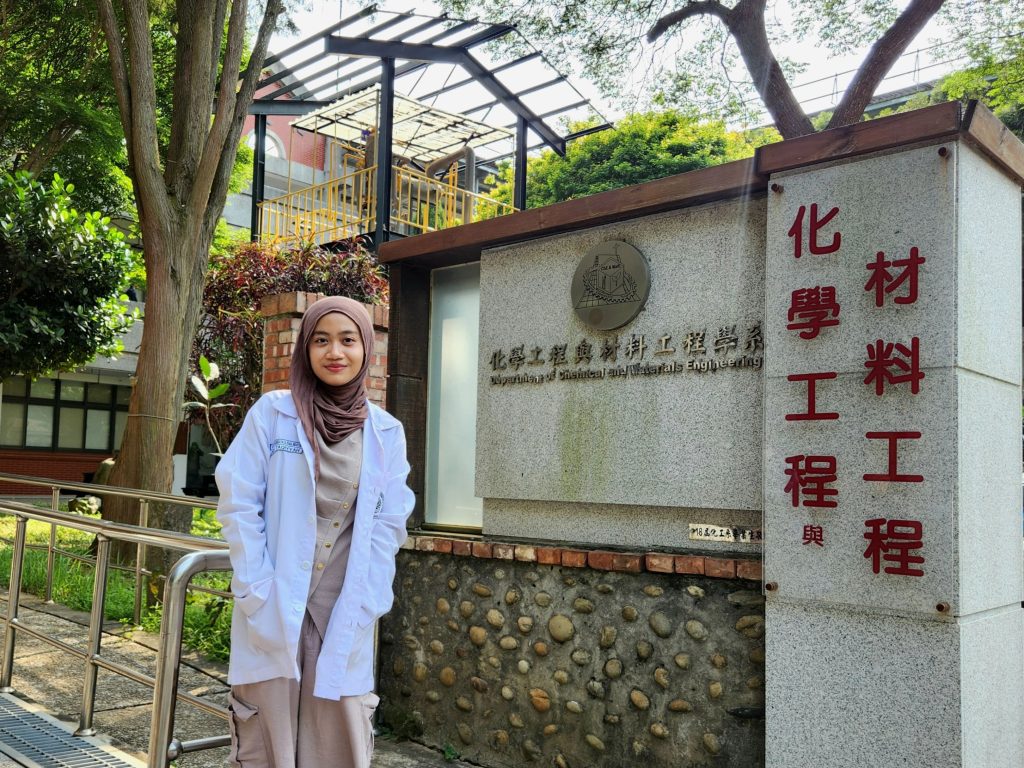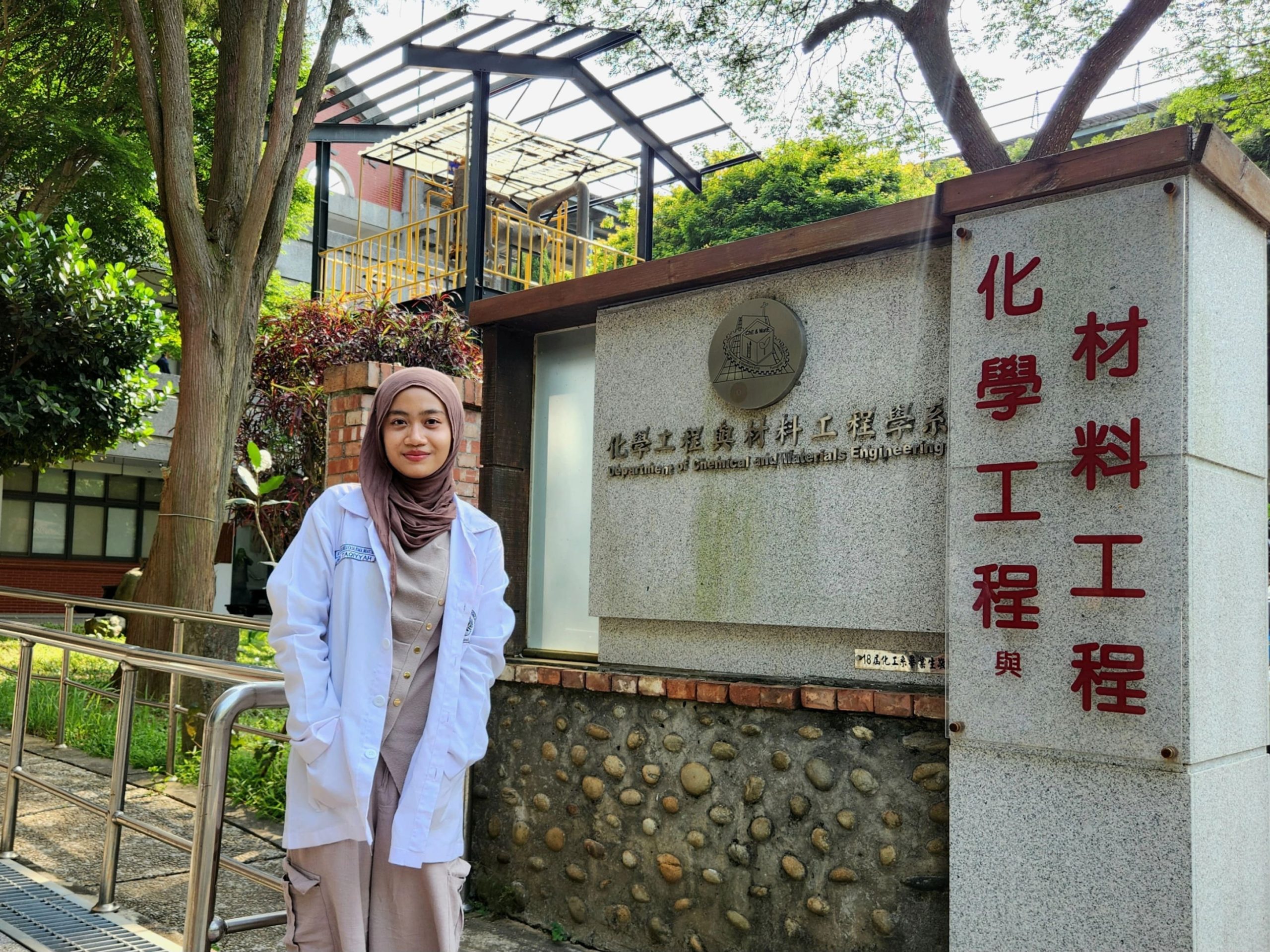
Taichung, Taiwan – Inas Taqiyyah, a student of Industrial Chemical Engineering Technology at Diponegoro University, is currently participating in a student exchange program at Tunghai University with a focus on developing environmental and sustainable energy research through experimental approaches and scientific literature review.
During the program, Inas worked on two main topics: experimental research related to steel industry waste treatment and the writing of a review paper in the field of bioenergy.
In her experimental research titled “CDI Ion Removal Method from Converter Slag–Water Interaction to Mitigate Environmental Impacts in Iron and Steel Waste Management,” Inas examined how solid waste from the steel industry, particularly converter slag, interacts with water and has the potential to release harmful ions into the environment.
Through the Capacitive Deionization (CDI) technology approach, this research aims to reduce the dissolved ion content in water resulting from such interactions. CDI is a water purification method based on electric fields that can attract and absorb dissolved ions into porous electrodes.
In this research, Inas conducted a series of experiments ranging from the slag leaching process to simulate real environmental conditions, determination of optimum conditions, to the analysis of ion removal efficiency using CDI. The main focus of this study is how this technology can serve as an innovative solution to reduce water pollution caused by steel industry waste, while also supporting more environmentally friendly waste management concepts.
In addition to experimental research, Inas also prepared a review paper titled “Enzymatic Pretreatment of Lignocellulosic Biomass Using Aspergillus japonicus for Enhanced Methane Production.”
In this review, she discussed the utilization of lignocellulosic biomass such as agricultural waste as a renewable energy source through biogas production. One of the main challenges in utilizing biomass is its complex lignocellulosic structure, which is difficult to degrade. Therefore, pretreatment using enzymes produced by microorganisms such as Aspergillus japonicus is carried out.
These enzymes are capable of breaking down lignin, cellulose, and hemicellulose components into simpler forms, making them easier to be digested by methane-producing microorganisms in the Anaerobic Digestion (AD) process. As a result, methane production efficiency can increase significantly, making this process more effective as a sustainable alternative energy source.
Through the combination of experimental research and literature review, Inas not only deepened her technical skills in chemical and environmental engineering but also developed a global perspective on solutions to energy and industrial waste challenges.
Her learning experience in an international academic environment with modern research facilities further supported this scientific exploration process. It is expected that the outcomes of this program will contribute significantly to the development of environmentally friendly technologies and renewable energy innovations in Indonesia.
The participation of students in international research activities also reflects Diponegoro University’s commitment to producing graduates who are adaptive, innovative, and capable of competing globally, particularly in addressing future sustainability challenges.